Why You Are Not Seeing SEO Results Even After Ranking Improvements
As AI-powered search experiences become more common, businesses need new ways to measure their online performance. Modern SEO results encompass rankings, AI visibility, traffic, leads, and revenue across platforms such as Google AI Overviews, ChatGPT, and Perplexity.
Sites may see early movements in impressions, indexing or rankings in the first 3 months, but the stronger business impact, like traffic, leads, or conversions, needs 6-12 months. The rankings and revenue do not always move together, but knowing which KPI to trust is what defines SEO success.
What Counts as SEO Results Beyond Rankings?
SEO results were traditionally confined to the ranking of your page on the SERP for a target keyword; the picture has been expanded now. Today, SEO results are measured in five categories:
- Organic rankings
- Organic traffic
- Engagement
- Conversions
- AI visibility in featured snippets, Google AI Overviews, ChatGPT, Perplexity
AI-driven search can increase your impressions even without clicks, which means your traffic graph might look flat, but your brand is getting exposure. According to research, answer engines provide more qualified leads, and businesses have seen 6 times more conversions from LLM traffic than from Google traffic.
Here is a table that will give you a clear picture of the SEO results:
| Result Layer | What it Looks Like | What It Tells You |
| Ranking movement | Keyword positions improve | Content is being evaluated favourably, but it says nothing about demand or revenue |
| Organic traffic growth | Sessions increase in GA4 | People are finding you, not whether they convert |
| Engagement | Time on page, scroll depth, return visits | Content resonates, an early signal before conversions show up |
| Conversions | Leads, sign-ups, calls, and sales rise | The business outcome lags behind the other layers |
| AI/LLM visibility | Brand cited in AI Overviews, ChatGPT, and Perplexity answers | Growing exposure channel, often invisible in traditional analytics |
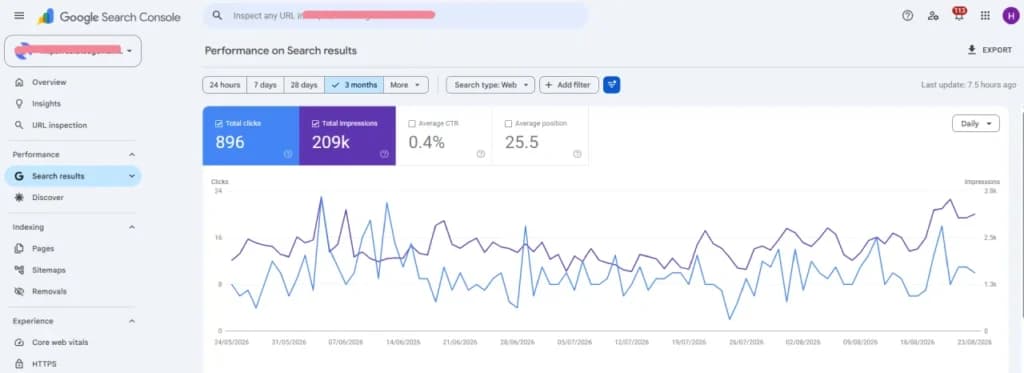
Your takeaway: A 3-month SEO practice cannot be measured by traffic; check Search Console for impressions and indexing trends, which are the first to move and signal greater results.
How Long Does it Take to See SEO Results?
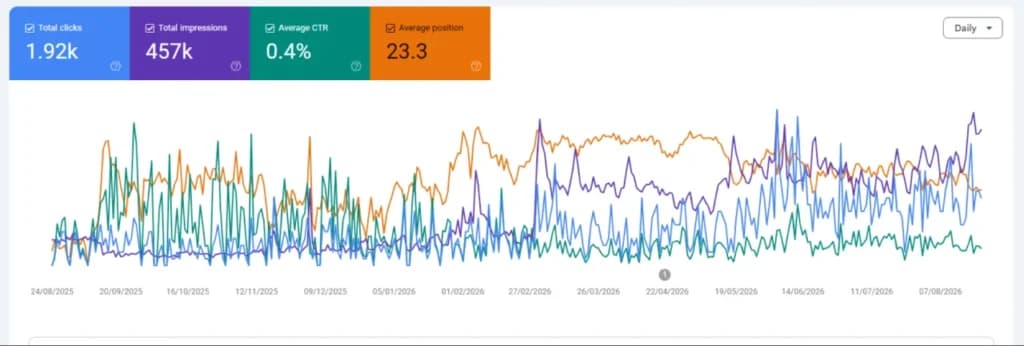
Most UK websites’ SEO results time frame is in the first 3 to 6 months of optimisation, with compounding gains between 6 and 12 months. For competing niches, the timeline is extended up to a year, with visible growth taking almost 2 years.
The statistics are not vague; in fact, Maile Ohye, a former Google Expert, states that SEO needs four months to a year for a business to implement changes and then see the benefit. It is because of how search engines work: your changes need to be crawled, indexed, and then evaluated against the competition for the same query.
When starting with a reasonably healthy site that has no major technical issues, we can assume the SEO results will be in the 3-6 month window. A brand new domain, site with existing penalties or competitive niches can further push this toward the 6-12 months range. The core factors affecting the SEO outcomes timeline are: domain authority, content quality/consistency and niche.
Which SEO KPIs Should I Track First?
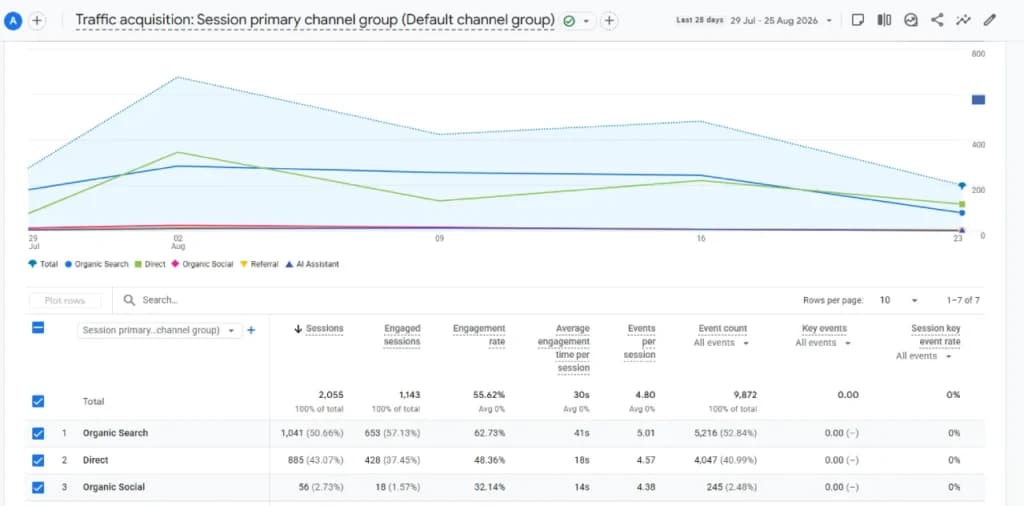
Not all KPIs are equally important at each stage; tracking the wrong metric early or ignoring the right metric is how teams either panic too soon or celebrate too early. The most common mistake is checking for conversions in 1st month and assuming SEO is not working! This is not the time for conversions. Likewise, celebrating a low-intent and value traffic spike that will not convert is also a mistake. Here is a practical KPI sequence for your ease:
- Indexing and crawl health (Search Console): the earliest signal; if pages are not indexed, nothing else can happen
- Impressions and average position: shows if you are starting to appear for target queries, even before clicks
- Organic sessions and engagement (GA4): traffic is arriving; engagement metrics indicate if it is the right traffic
- Conversions: the metric that connects SEO to business value
- Branded search volume: a rising trend here indicates growing brand awareness driven by content visibility
- AI Overview/LLM citation appearances: check if your content is being cited or summarised in AI-generated answers for relevant queries
If a metric is not moving, even at its expected stage, like zero impressions after 3 months, it is a signal for you to investigate technical or content errors.
How Do I Know if SEO is Actually Working?
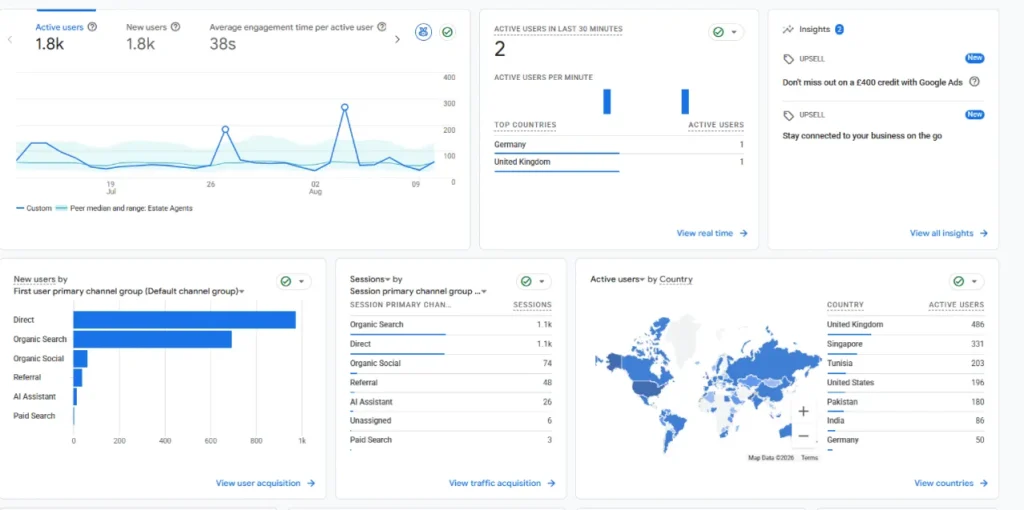
To know if SEO is working, track these four metrics: rankings, traffic, leads, and revenue. All of them form a chain, but it does not mean that movement at one link will move to the next. Gaps in the chain have different likely causes, and they require a different fix.
| Gap | Likely Cause | What to Check |
| Rankings improve, traffic does not | Low search volume keywords, or ranking for terms with low click-through (e.g., position 8-10) | Search volume data, CTR by position |
| Traffic improves, leads do not | Wrong search intent (like, informational traffic landing on a sales page), weak CTAs | Landing page-to-intent match, on-page conversion paths |
| Leads improve, revenue does not | Lead quality issue, high-volume but low-fit prospects | Lead source attribution, sales team feedback on lead quality |
| Rankings/traffic flat, but branded search & AI citations rising | Visibility is growing through channels not captured by traditional rank tracking | Branded search trend, AI Overview, and appearance checks |
Gaps like these are why a single “SEO is working?/not working” verdict is almost always too simple. The right question here is “where in this chain is the gap and what does it tell us to fix?”
Why Traffic Can Increase Without Leads (and Vice Versa)
Traffic responds to visibility and search volume, while leads respond to intent match and the quality of the conversion path; however, traffic without leads is often treated as a failure. Still, it can also mean you are successfully capturing top-of-funnel awareness traffic that simply is not meant to convert immediately, which has its own value (retargeting pools, branded search growth, future direct visits).
- Traffic up, leads flat: Often means new traffic is informational-intent (people researching, not ready to buy); common when content targets broad, awareness-stage keywords. Not necessarily bad, but should not be the only growth being reported as “SEO success.”
- Leads up, traffic flat: Can happen when existing traffic is better-matched to high-intent terms after on-page or CTA optimisation, meaning the same visitors convert at a higher rate. This is often a sign of content/intent alignment work paying off, even without visible traffic growth.
- Both flat, but branded search rising: Suggests SEO content is building brand recognition that’s translating into direct visits or branded searches.
When reporting results, separate “are more people finding us” from “are the right people finding us and acting”; these are different questions with different fixes.
How Do I Measure SEO Performance in AI Search Experiences?
As AI Overviews, ChatGPT, and Perplexity increasingly answer queries directly, appearing as a cited source in these LLMs is becoming a measurable and valuable SEO result. Most analytics tools were not built to track AI citations, so this often requires manual spot-checks rather than automated dashboards. Practical ways to track this emerging layer:
- Periodically test your target queries in Google AI Overviews, ChatGPT, and Perplexity; see if your domain/content is cited or summarised
- Track branded search volume over time. AI citation exposure often drives people to search your brand name directly afterwards
- Monitor share of voice, your visibility relative to competitors across both traditional rankings and AI-generated answers for the same query set
- Watch for referral traffic from AI platforms in GA4.
Ignoring AI visibility means missing a growing share of how people discover brands and what “results” will mean going forward.
How Should SEO Results Be Reported to Stakeholders or Clients?
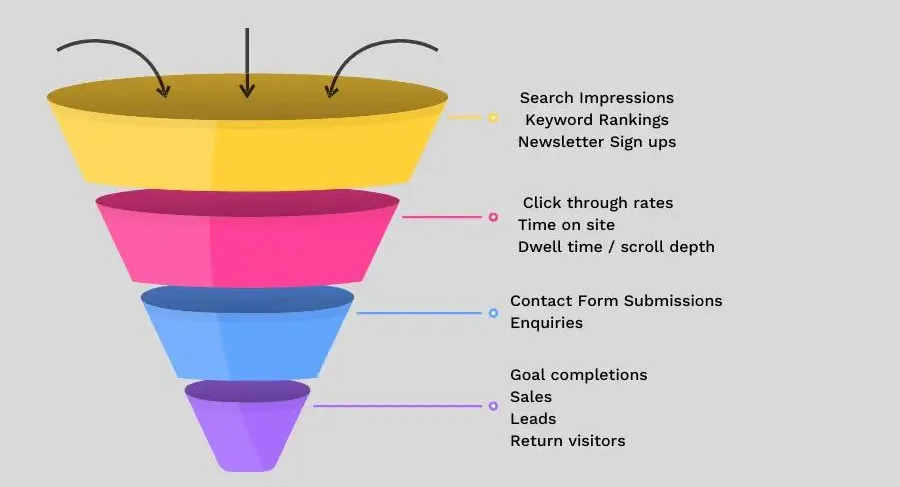
Good SEO results reporting connects metrics across the full chain, like rankings, traffic, conversions and revenue, not just what looks best that month. Cherry-picking a single strong metric, e.g., “traffic is up 40%!”, is how SEO loses stakeholder trust when the bigger picture does not match expectations. A balanced SEO report typically includes:
- Visibility metrics: rankings, impressions, share of voice
- Traffic metrics: organic sessions, new vs returning, by landing page
- Engagement metrics: bounce rate, time on page, scroll depth (as leading indicators for conversion potential)
- Conversion metrics: leads, assisted conversions, conversion rate by source
- Revenue attribution: where possible, connect organic-driven leads to closed revenue (even directionally)
- Emerging visibility: branded search trends, AI Overview/LLM citation spot-checks
ROI conversions are better when revenue is connected to the funnel above it, even by estimate, “X% of organic leads historically convert to Y revenue”; you can not report rankings and revenue as if they are not related.
Conclusion
Want to know what “SEO results” should look like for your site? Every business has a different mix of KPIs that matter most. Get a free SEO performance review; we will map out which metrics to track, in what order, and what realistic benchmarks look like for your specific goals.